


Javier Alvarez / SOS MEDITERRANEE

Still at Sea is a year-long timeline illustrated by artists from different backgrounds. It is part of the initiatives launched by SOS MEDITERRANEE for the 10th anniversary of its operations in the Central Mediterranean. Through monthly publications, Still at Sea revisits key dates that have shaped rescue and the humanitarian crisis in the Central Mediterranean over the past decade. Each post returns to a specific moment — an operation, a decision taken on land, a withdrawal of rescue capacity — to show that deaths at sea are neither inevitable nor isolated tragedies. Individually, each event shocks; collectively, they reveal a pattern — made in full knowledge of their consequences. Read together, these dates reveal how today’s reality at sea was built.
 © Jean Julien
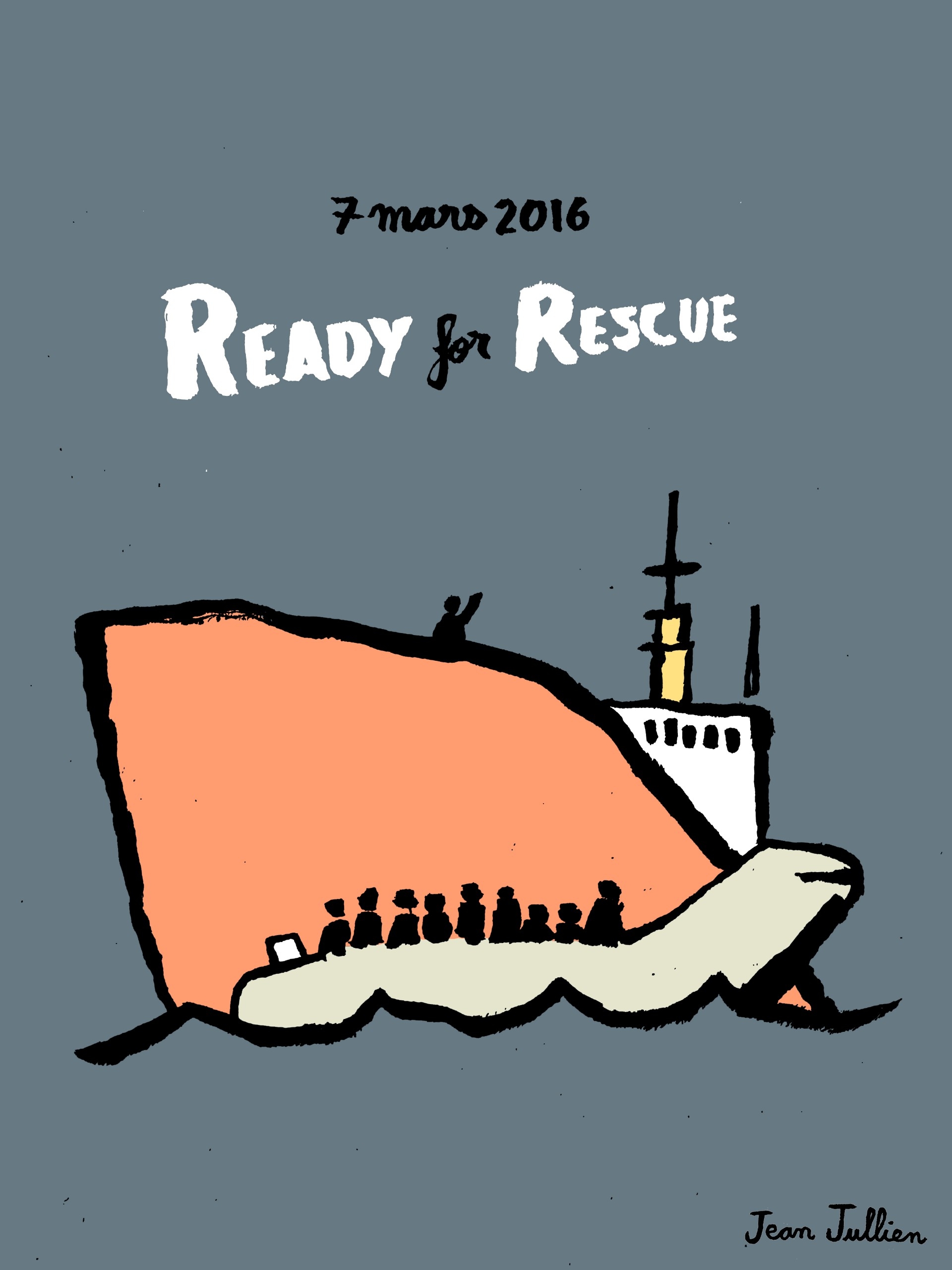
7 March 2016
74 people in distress at sea.
On 7 March 2016, the Aquarius, SOS MEDITERRANEE’s first rescue ship, carried out its first rescue operation in the Central Mediterranean.
Following an alert relayed by the Rome Maritime Rescue Coordination Centre, 74 people were rescued on the Libya–Italy route and brought to safety on board.
This marked the beginning of a continuous civilian search and rescue presence at sea in one of the deadliest migration routes in the world.
10 years later, SOS MEDITERRANEE is Still at Sea.
Since that first rescue, more than 42,700 people have been assisted in the Central Mediterranean.
International maritime law is clear:
States have an obligation to render assistance to any person in distress at sea
and to ensure prompt disembarkation in a place of safety.
Over the past decade, this duty has progressively eroded.
Proactive state-led search and rescue has been replaced by fragmentation, outsourcing, and obstruction.
April 2021
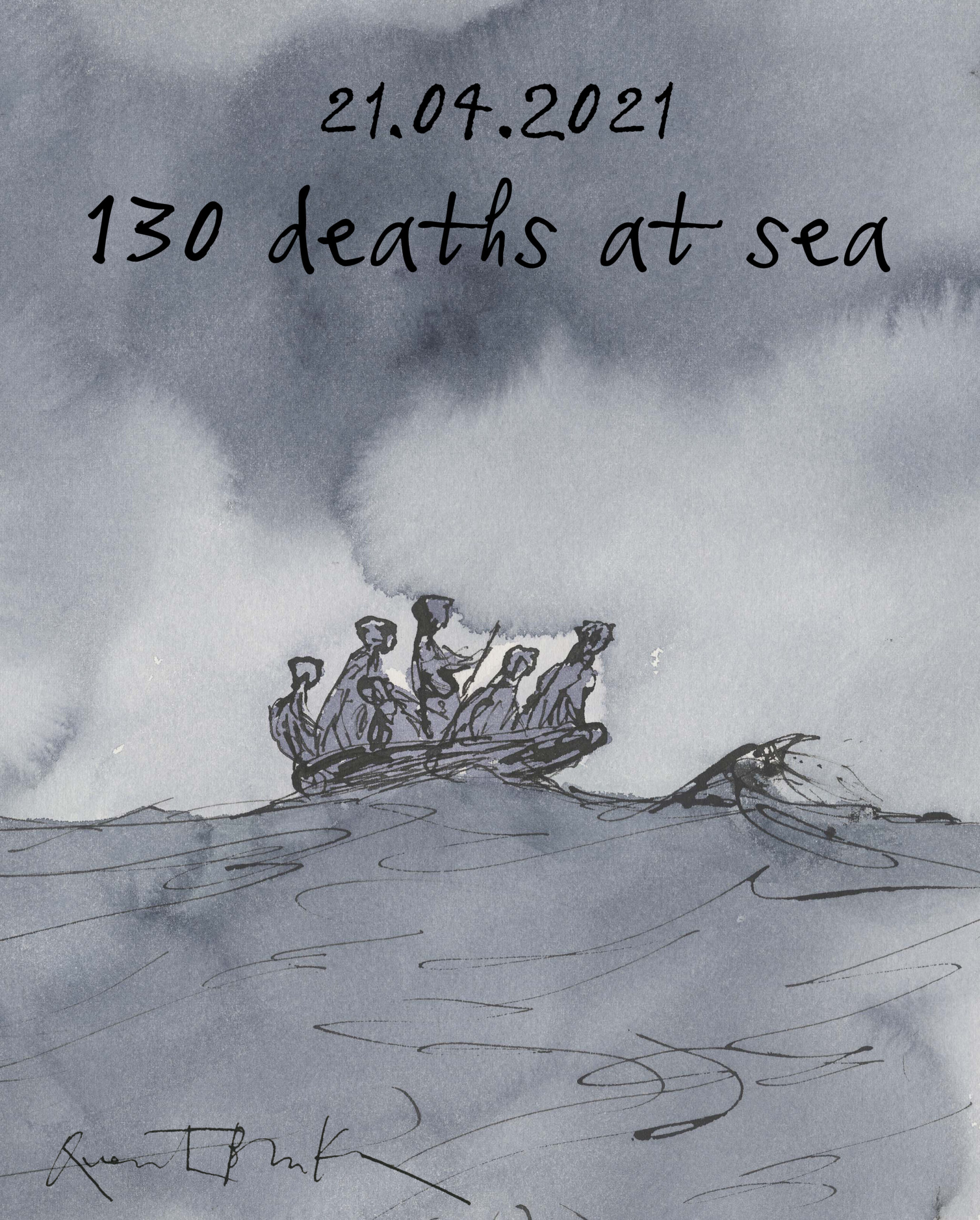
A rubber boat carrying around 130 people drifts in the Central Mediterranean.
People are in distress. Hours pass with a storm approaching in the distance and conditions worsening through the night. Multiple distress alerts are transmitted to the competent authorities.
No rescue reaches the boat. No authority assumes coordination. No coordinated rescue response is deployed in time.
When the Ocean Viking, our rescue ship, arrives on 21 April, it only finds the wreck and bodies of the victims at sea. No survivors were found.
International maritime law requires authorities to coordinate assistance to people in distress at sea.
In this case, distress was known, but assistance did not arrive.
This was not an inevitable tragedy. It was a failure to act.
 © Quentin Blake
 © Alaa Satir
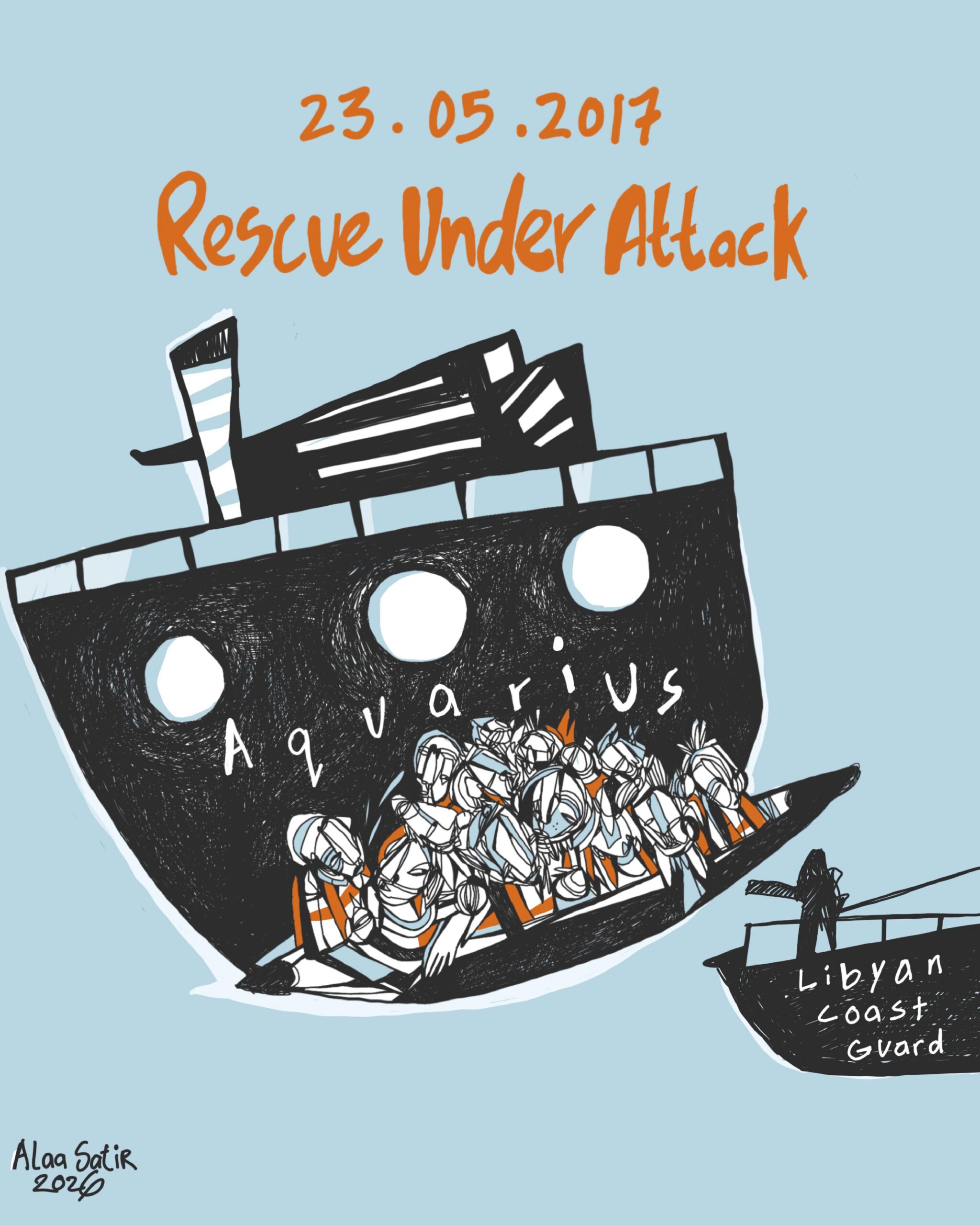
23 May 2017
The Aquarius is assisting several boats in distress.
A Libyan Coast Guard patrol boat approaches at high speed. Libyan coast guards fire shots into the air. Shots strike the water around the boats.
Officers board one of the boats at gunpoint. Personal belongings are confiscated. Panic spreads.
More than 60 people jump into the sea. Thankfully, no deaths are reported.
Unfortunately, several people are intercepted and returned to Libya with uncertain fates.
Rescue operations require coordination and protection. On this day, assistance was met with armed interference.
In the months preceding this incident, European support to Libyan coastguard operations had increased.
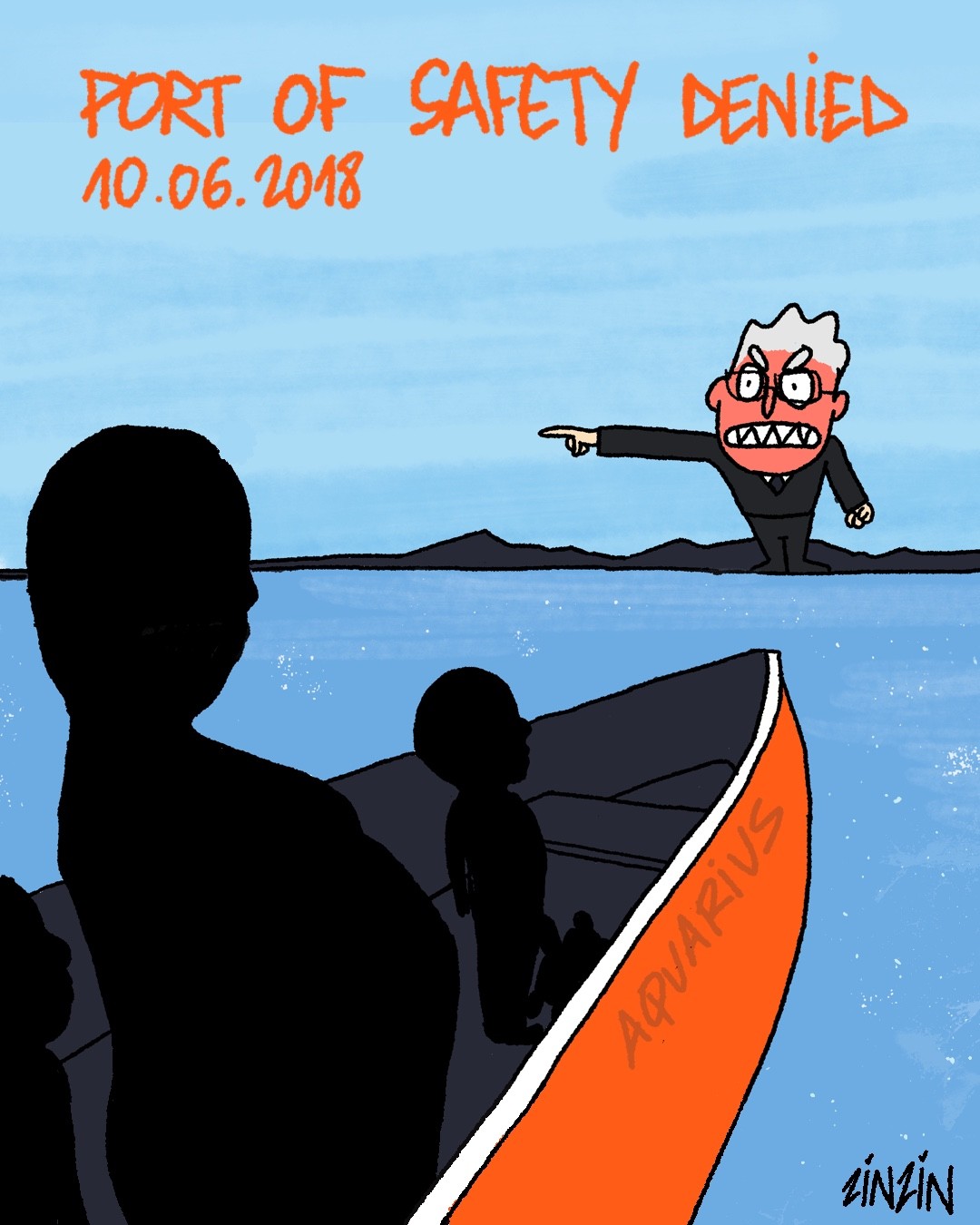
10 June 2018
Over several rescue operations, the Aquarius rescues 630 people. On board are unaccompanied minors and pregnant women.
Access to Italian and Maltese ports is denied. The ship remains at sea.
A public political and diplomatic confrontation unfolds between European states. Days pass. Conditions on board deteriorate.
In worsening weather conditions, the Aquarius is instructed to sail more than 1,500 km to Valencia, Spain, to disembark.
International maritime law requires prompt disembarkation in a place of safety. Rescue is not complete until people reach a place of safety. Here, survivors were brought on-board but left waiting at sea.
A new practice begins: standoffs at sea.
 © Caroline Nasica
 © Marie Mo
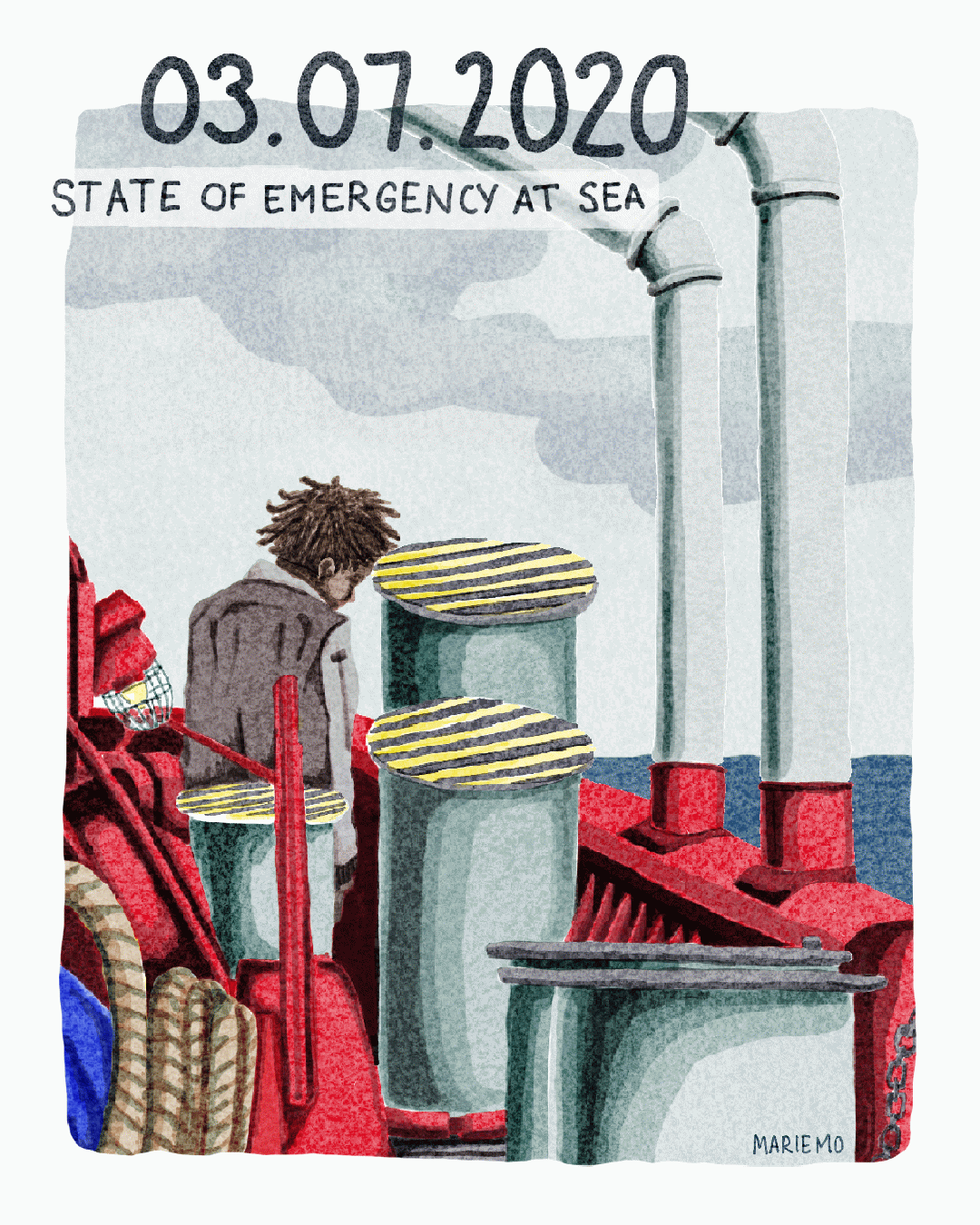
3 July 2020
The Ocean Viking had carried out four successful rescue operations. 180 people were on board. No authority responded in time to designate a port of safety.
On board, tension was critical. Some survivors were facing acute psychological distress. A state of emergency had to be declared.
As days passed, the situation on board became unbearable. Scarred by the ordeals of their journey, survivors were showing signs of depression and acute mental exhaustion.
SOS MEDITERRANEE had to request the immediate medical evacuation of 44 people in critical condition.
A rescue is only complete when survivors reach a place of safety, designated by maritime authorities. The 180 people rescued by the Ocean Viking were abandoned at sea, by these authorities. For people already in a vulnerable state, each day at sea delayed the care they needed on land.


